London, 5 February 2026
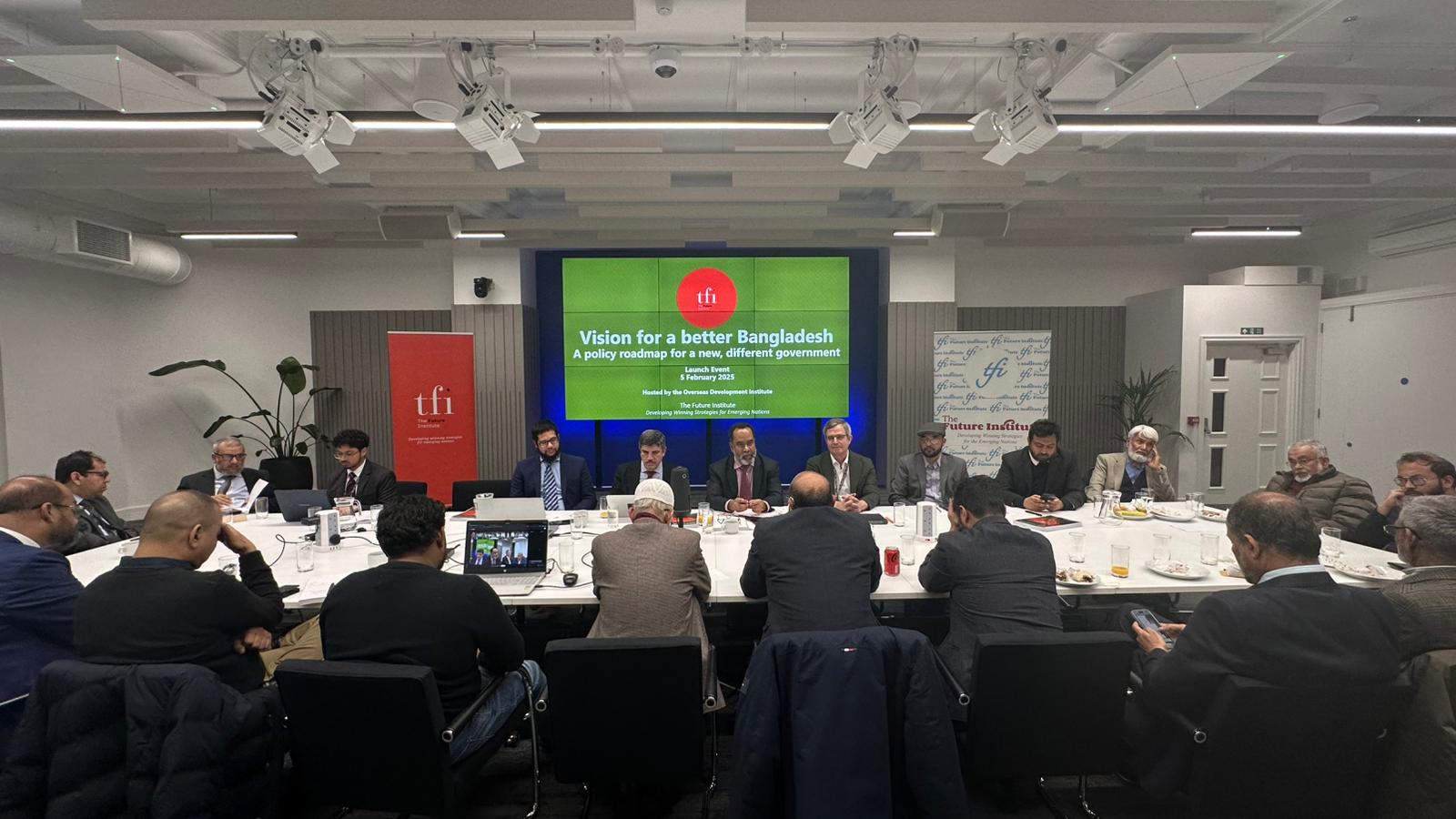
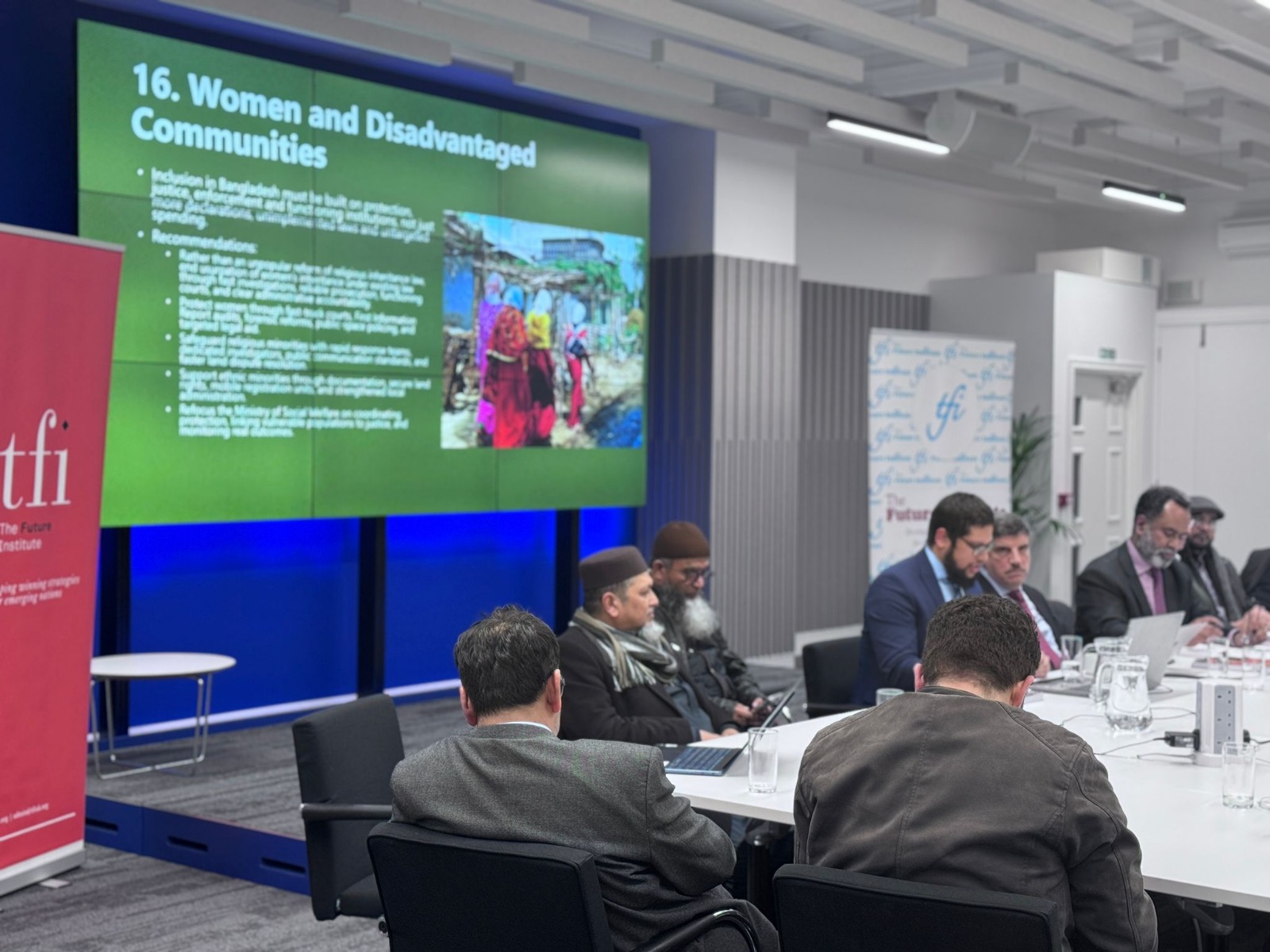
The Future Institute today officially launched its landmark policy roadmap Vision for a Better Bangladesh at an event held at the Overseas Development Institute (ODI) in Westminster. The 302-page publication, developed by over twenty experts based in six countries, offers a comprehensive, evidence-based policy framework intended to support strategic governance and effective policymaking in Bangladesh.
With the national election scheduled for 12 February 2026, Bangladesh is at an important junction in its development. Vision for a Better Bangladesh emphasises that leadership must be guided not by impulse or reaction, but by clear vision, sound evidence, and strong values to ensure lasting national progress.
The launch event was chaired by Dr Mohammad Abdul Aziz, Vice-Chair of the Future Institute’s Board of Advisors. The main presentation was delivered by Raiyan Azmi, Director of the Future Institute, who outlined the motivation and purpose behind the project. He highlighted the importance of preparedness in policymaking, noting that newly elected governments often enter office without clear, detailed, and research-based strategies. This gap, he said, can lead to delayed reforms and policy vacuums that are filled by actors outside government, weakening democratic accountability and disconnecting government policy from the public’s values and priorities.
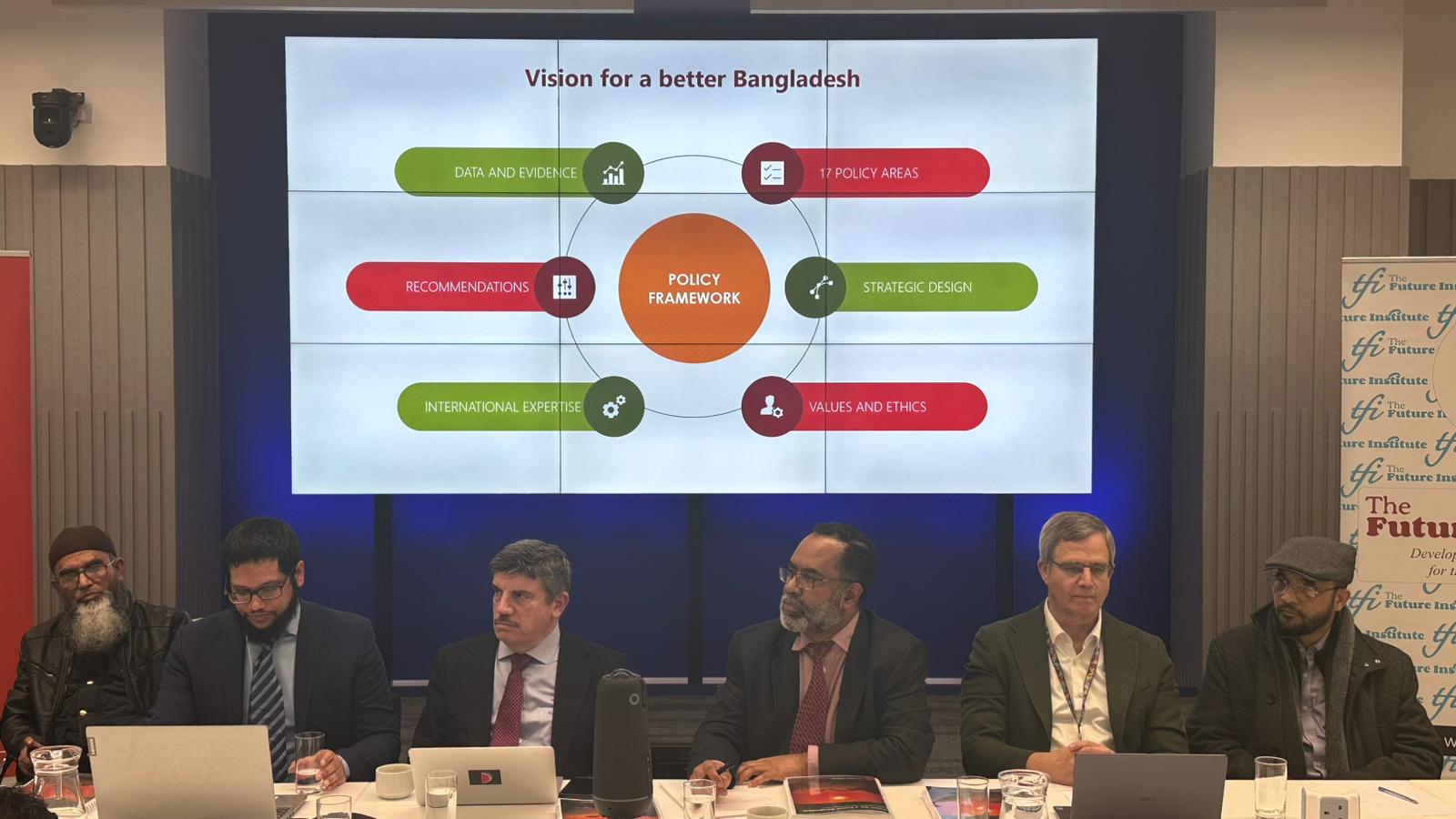
The policy roadmap is organised around five major themes covering seventeen key sectors:
Specific policy analyses cover seventeen key sectors including eliminating corruption, public sector reform, economic policy, population change, technology, foreign and defence policy, health, education reform, agriculture and food security, environment, transport, digital transformation, culture, women’s rights and meda policy. Each area combines international best practices with careful consideration of Bangladesh’s social, political, and economic realities.
Responding to the publication, distinguished speakers underlined the value of a forward-looking and evidence-driven approach:
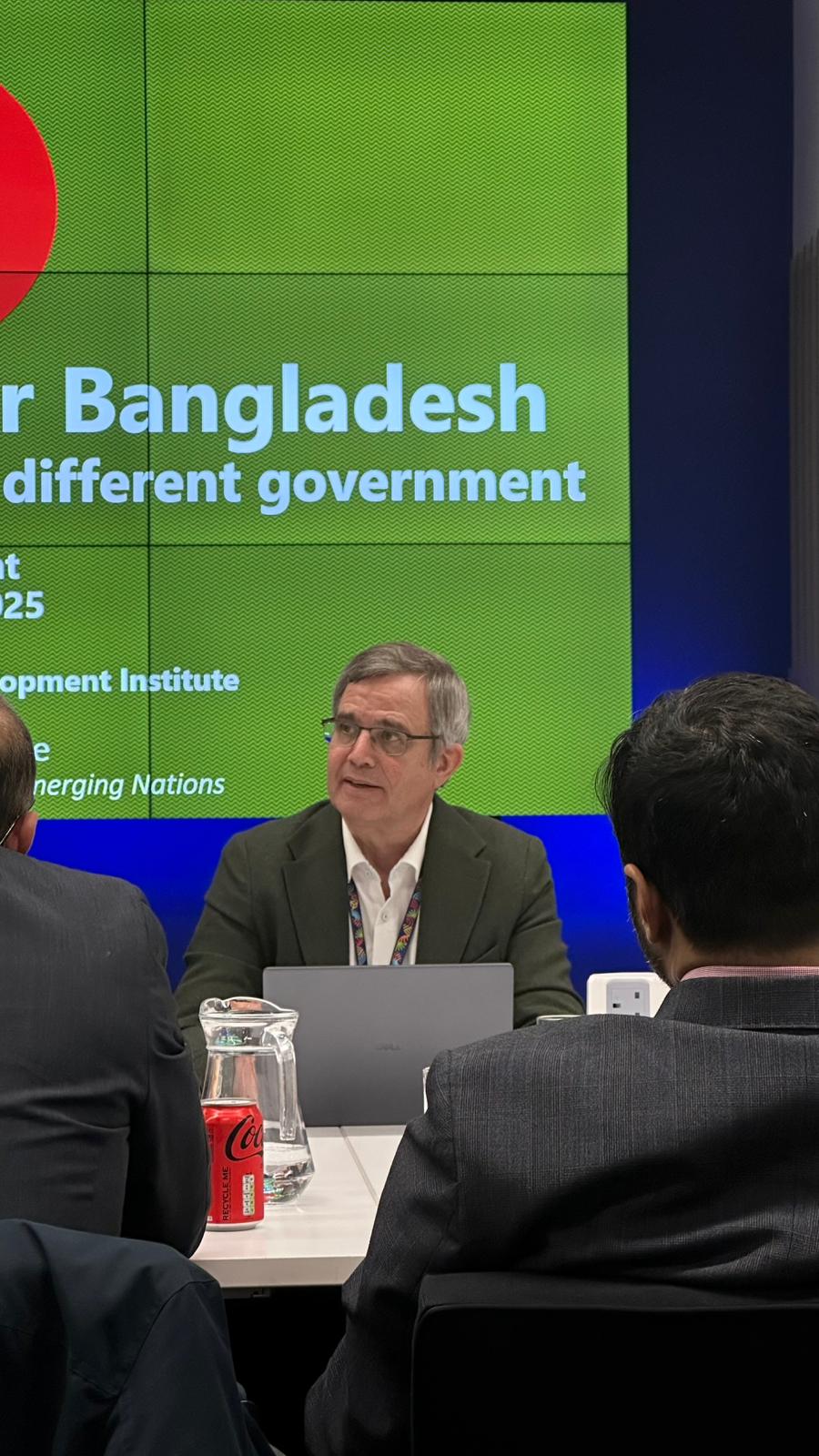
Professor Hans-Peter Lankes, Deputy Chief Executive and Managing Director of ODI and visiting professor in practice at the LSE Grantham Research Institute, commended the publication as “a pragmatic and inspired vision,” noting that the breadth of challenges facing Bangladesh requires complementary policy responses on several fronts simultaneously. Drawing on his experience as a development economist, he highlighted the key role of institutions, as well as energy sector opportunities and the need for coordinated action against corruption.
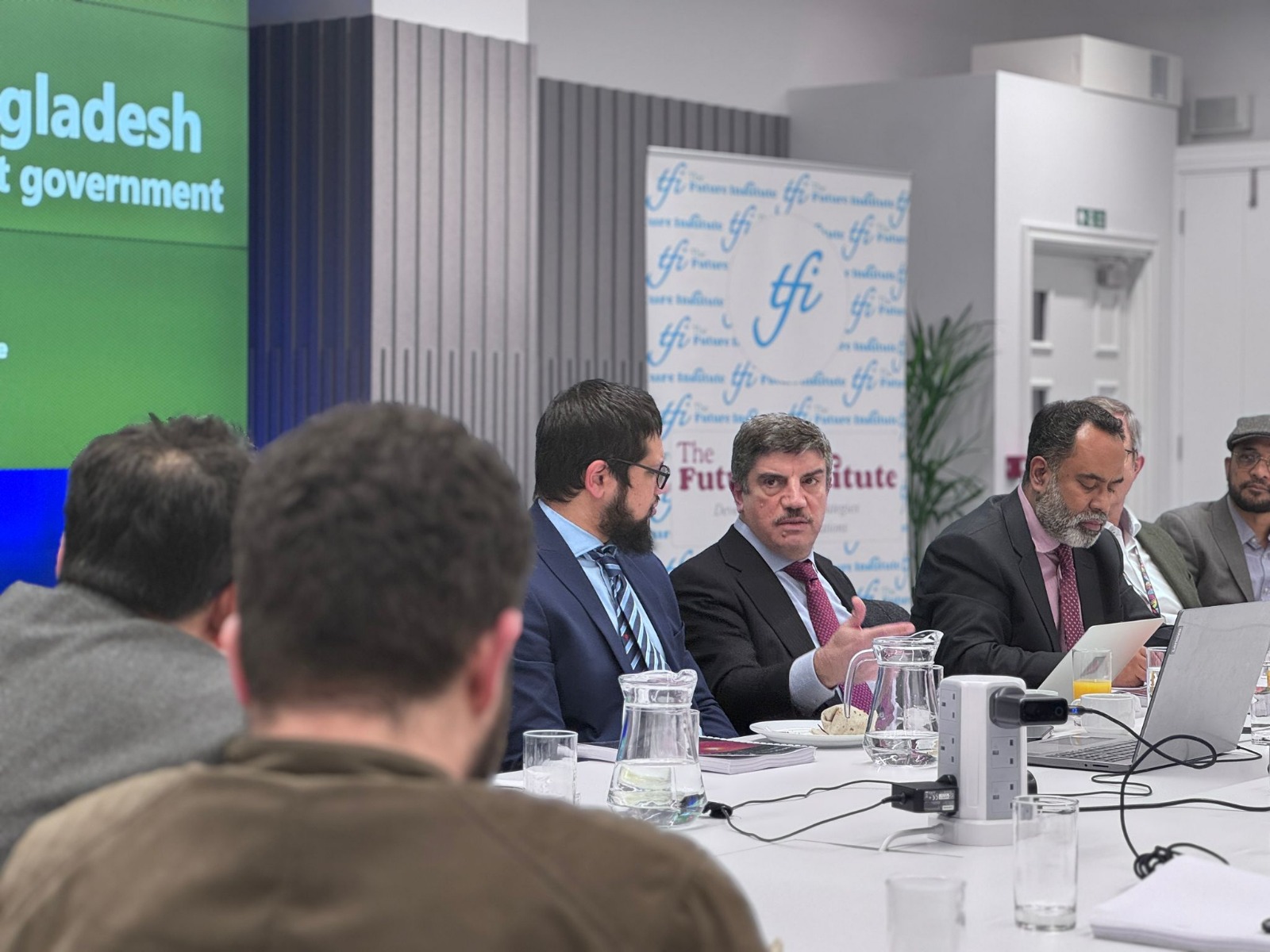
Professor Yasin Aktay, member of the Board of Advisors of the Future Institute and former President of the Ankara-based Institute for Strategic Thinking, reflected on the role of motivation, values, and leadership in societal transformation. He praised the policies’ integration of Islamic perspectives alongside rigorous research, emphasising that without ethical grounding, good governance is not possible. He shared Türkiye’s experience in successfully reducing corruption in the early 2000s, and also highlighted that population is an asset, not a liability, comparing Türkiye’s challenge of low fertility rates with Bangladesh’s current trajectory.
During the subsequent discussion, participants from various think tanks and organisations debated persistent challenges such as entrenched corruption and bottlenecks in sectors such as energy and transport, as well as the role of informal networks and the Bangladeshi diaspora in contributing to Bangladesh’s future.
Vision for a Better Bangladesh and the accompanying launch presentation are available on the Future Institute’s website using the download links below. For media or other inquiries, or to purchase a copy, please contact admin@tfiuk.org.